
Interesting Facts About Cats. Getting to know our feline friends
You share your life with a species shaped by sharp senses, precise movement, and a long history alongside humans. Cats combine efficient anatomy with learned behaviors, which explains why they hunt silently, rest often, and communicate in subtle ways you may overlook.

Interesting information about cats shows how their biology, behavior, and shared history with people shape everything from daily habits to cultural meaning. You will see how sensory abilities guide their actions, why certain behaviors repeat across homes, and how selective breeding created wide variation in size, coat, and temperament.
You will also explore how domestic cats relate to wild relatives and feral populations, and how stories, beliefs, and modern media reflect this relationship. Together, these details clarify why these felines remain adaptable companions across homes, cities, and cultures.
Essential Facts About Cats

You interact with domestic cats shaped by thousands of years of coexistence with humans, specialized anatomy, and predictable life stages. These facts help you understand where they came from, how their bodies work, and what to expect across a typical lifespan.
History and Domestication
Domestic cats began living alongside people at least 9,500 years ago, based on a burial discovered on Cyprus that linked a human and a cat. This relationship likely formed around agriculture, where cats controlled rodents near stored grain. You benefit today from traits selected through this long coexistence, including tolerance for human environments.
Cats spread globally through trade routes rather than formal breeding programs. Cultural attitudes varied widely, from reverence in ancient Egypt to persecution in medieval Europe. Modern milestones include the first organized cat show in London in 1871, which helped standardize breeds.
Cats also entered modern science and exploration. In 1963, France sent a cat named Félicette into space, making her the first and only cat astronaut to survive orbital flight.
Unique Physical Characteristics
A cat’s body prioritizes balance, flexibility, and sensory processing. The righting reflex allows you to see cats rotate midair and land on their feet during falls. This ability relies on the inner ear, vision, and a highly flexible spine working together.
You also see advanced neurological traits. The cat brain contains roughly 300 million neurons, with structures responsible for emotion that closely resemble those in humans. This supports learning, memory, and social bonding.
Key physical traits include:
- Retractable claws for climbing and hunting
- Fixed jaw motion, which limits chewing but improves bite force
- Whiskers that detect airflow and spatial limits
These features define how they move, hunt, and interact with you.
Cat Lifespan and Longevity
You can expect most indoor cats to live 12–16 years, with many reaching their late teens under consistent care. Genetics, diet, and preventive veterinary visits play a measurable role in longevity. Outdoor cats often live shorter lives due to injury and disease exposure.
Cats mature quickly. A litter of kittens typically arrives after a 63–65 day gestation, and kittens reach adulthood within their first year. Aging then progresses gradually, with noticeable changes in activity, weight, and sleep patterns after age seven.
Common lifespan factors include:
- Spaying or neutering, which reduces disease risk
- Weight management, linked to joint and metabolic health
- Environmental enrichment, which supports cognitive function
Understanding these patterns helps you make informed decisions at every life stage.
Incredible Cat Senses and Abilities
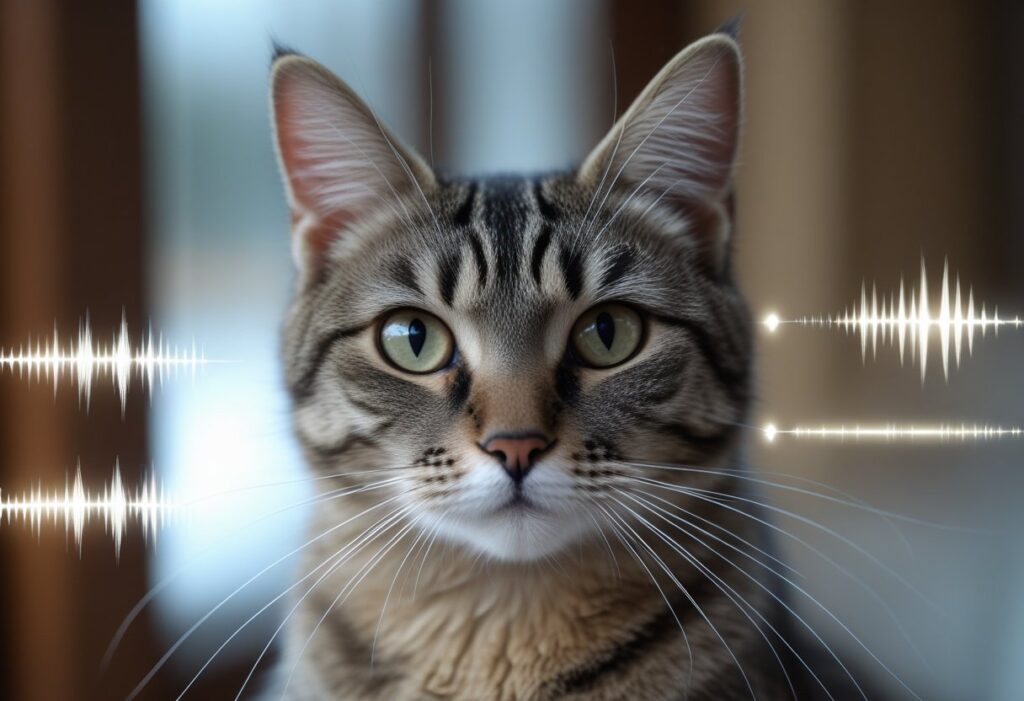
Your cat relies on specialized vision, precise sensory hairs, and refined balance systems to move, hunt, and react with accuracy. These traits work together to support daily behaviors like jumping, navigating tight spaces, and tracking motion in dim light.
Night Vision and Tapetum Lucidum
Your cat sees well in low light because the eye contains a tapetum lucidum, a reflective layer behind the retina. This structure redirects unused light back through the photoreceptors, increasing visual sensitivity at dawn and dusk. Cats also pack more rod cells into the retina than you do, which improves motion detection in darkness.
This design trades detail for sensitivity. Your cat sees less sharp detail in bright conditions and focuses better on nearby objects. Slit-shaped pupils help regulate incoming light and improve depth of field during the day.
| Feature | Cats | Humans |
|---|---|---|
| Light needed to see | ~1/6 as much | Higher |
| Visual acuity | 20/100–20/200 | ~20/20 |
| Field of view | ~200° | ~180° |
You can find a detailed breakdown of feline vision in this overview of cat senses and low-light vision.
Whiskers and Ear Furnishings
Your cat’s whiskers, also called vibrissae, act as high-precision touch sensors. Each whisker connects to deep nerve endings that detect air movement and surface proximity. This system helps your cat judge whether its body can fit through narrow gaps without visual input.
Ear furnishings, the stiff hairs inside and around the ears, support sound detection. They guide sound waves toward the ear canal and protect it from debris. Combined with independently rotating ears, these structures allow your cat to locate sound sources with notable accuracy.
Key roles of whiskers and ear furnishings include:
- Measuring openings before entry
- Detecting prey at close range
- Improving sound direction and clarity
Balance and Third Eyelid
Your cat maintains balance through a well-developed vestibular system in the inner ear. This system coordinates head position, eye movement, and body alignment during jumps and rapid turns. It explains why cats often land on their feet when falling from short heights.
The third eyelid, or nictitating membrane, adds protection without blocking vision. It sweeps across the eye from the inner corner, clearing debris and spreading tears. You may notice it briefly when your cat blinks, wakes, or feels unwell.
This membrane also shields the eye during hunting or movement through dense spaces. It supports eye health while allowing your cat to stay alert and visually focused.
Cat Behaviors Explained
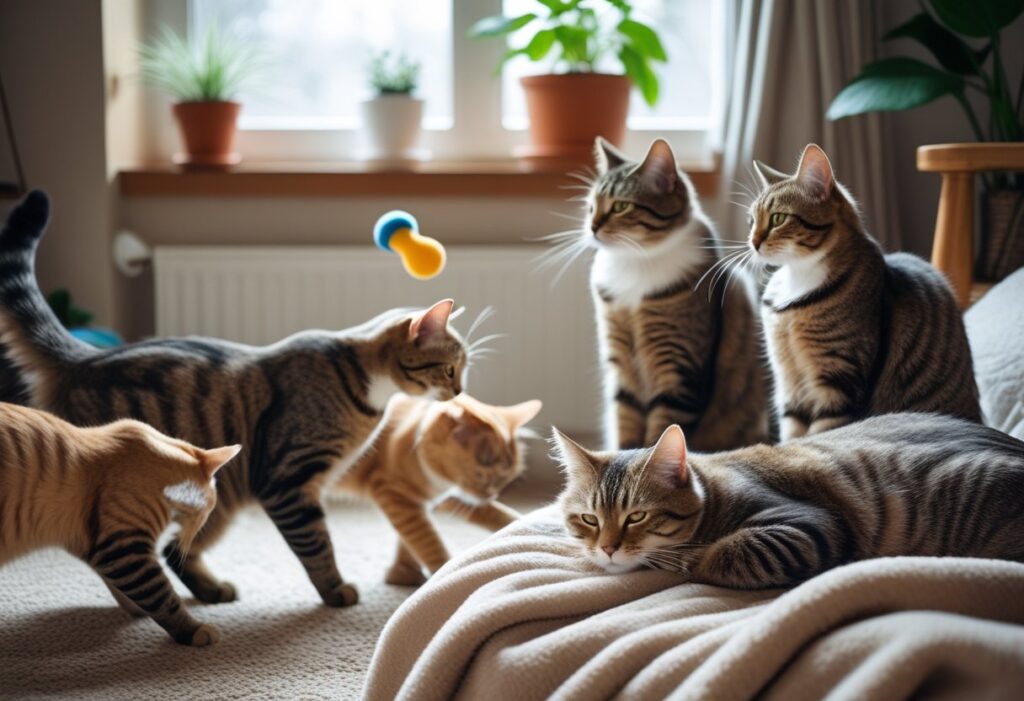
Cats show clear patterns in how they relax, seek comfort, and communicate. You can read these actions to better understand daily needs, emotional states, and social boundaries through common cat behaviors.
Why Cats Purr
Cats purr for more than one reason, and context matters. You often hear purring during calm moments like petting or resting, which signals comfort and safety. Research summarized in guides such as why cats purr shows that they also purr when stressed or unwell.
Purring can act as a self-soothing behavior. They may purr during vet visits, recovery, or unfamiliar situations.
Common reasons cats purr include:
- Contentment during rest or affection
- Stress reduction in unfamiliar environments
- Requests for attention or food
This mix of emotional and physical triggers makes purring one of the most complex cat behaviors you encounter at home.
Kneading and Other Cat Behaviors
When cats knead, they push their paws in and out against soft surfaces. This behavior begins in kittenhood, when kneading stimulates milk flow. Many adult cats keep kneading as a comfort habit, which explains why they knead blankets, clothing, or your lap.
Kneading also serves a marking function. Scent glands in the paws leave familiar smells behind, which helps cats feel secure.
According to explanations of common cat behaviors, kneading often appears alongside relaxed body posture and half-closed eyes.
You may also notice kneading paired with:
- Purring
- Slow blinking
- Curling up to sleep
These combinations signal trust and emotional comfort rather than play or excitement.
Communication and Body Language
Cats rely heavily on body language instead of vocal sounds. You can learn a lot by watching the tail, ears, eyes, and posture together. For example, slow blinking usually signals trust, while a flicking tail often shows irritation or high focus.
Direct staring can mean confidence or tension depending on the situation. Subtle cues matter more than single movements.
Resources on cat behavior explain how these signals evolved from solitary hunting instincts.
Quick body language guide:
| Signal | Likely Meaning |
|---|---|
| Slow blink | Comfort and trust |
| Upright tail | Friendly or confident |
| Flattened ears | Fear or overstimulation |
These fun facts about cats help you respond appropriately and avoid misreading their intentions.
A World of Cat Breeds
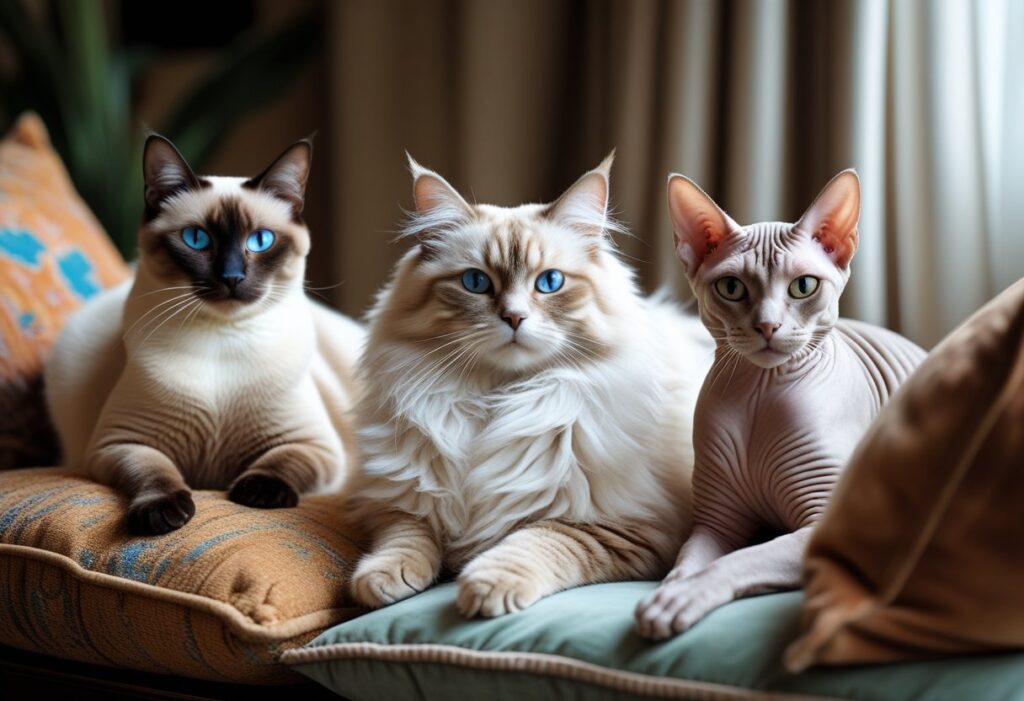
You encounter a wide range of cat breeds shaped by geography, selective breeding, and human needs. Some breeds dominate households worldwide, while others remain rare or tied to specific regions. Physical traits, coat types, and behavior patterns help you understand why certain cats fit particular lifestyles better than others.
Popular Domestic Breeds
Many households gravitate toward well-known cat breeds because they offer predictable traits and long breeding histories. Siamese cats stand out for their vocal nature, slim build, and strong attachment to people, while the Maine Coon appeals through large size, dense fur, and tolerance for cold climates.
The Persian cat features a flat face and long coat that requires daily grooming, making care commitment an important factor. Breeds like Ragdoll and Burmese tend to seek close human contact and adapt well to indoor living.
You can explore how major registries classify these common breeds through the recognized cat breeds listed by TICA, which highlights differences in size, coat, and temperament.
Unique and Rare Breeds
Some cats stand out due to limited populations or unusual origins. The Egyptian Mau traces its lineage back thousands of years and remains one of the few naturally spotted domestic cats. The Turkish Van developed a rare affinity for water, a trait uncommon among cats.
Breeds like the Manx, known for its tailless appearance, result from genetic mutations that breeders preserved over time. Others, such as the Sphynx, attract attention for their hairless bodies and high warmth needs.
Not all feline species fall under domestic breeds. The black-footed cat, for example, is a small wild cat native to southern Africa and differs entirely from household cats in behavior and care needs, as outlined in general feline classifications by Britannica’s overview of cats.
Distinctive Breed Characteristics
Breed characteristics influence how a cat fits into your daily routine. Coat length affects grooming time, with long-haired breeds like Persians shedding heavily, while short-haired breeds reduce maintenance. Body structure matters too, as muscular breeds such as the Bengal require more physical stimulation.
Temperament varies widely across breeds:
- Siamese: highly vocal and people-oriented
- Ragdoll: relaxed and tolerant of handling
- Turkish Van: energetic with strong jumping ability
Understanding how selective breeding shaped these traits helps you choose wisely. A clear breakdown of breed traits and care needs appears in guides covering different types of cat breeds and their characteristics, which connect behavior, health, and environment.
Cats and Humans: A Special Relationship
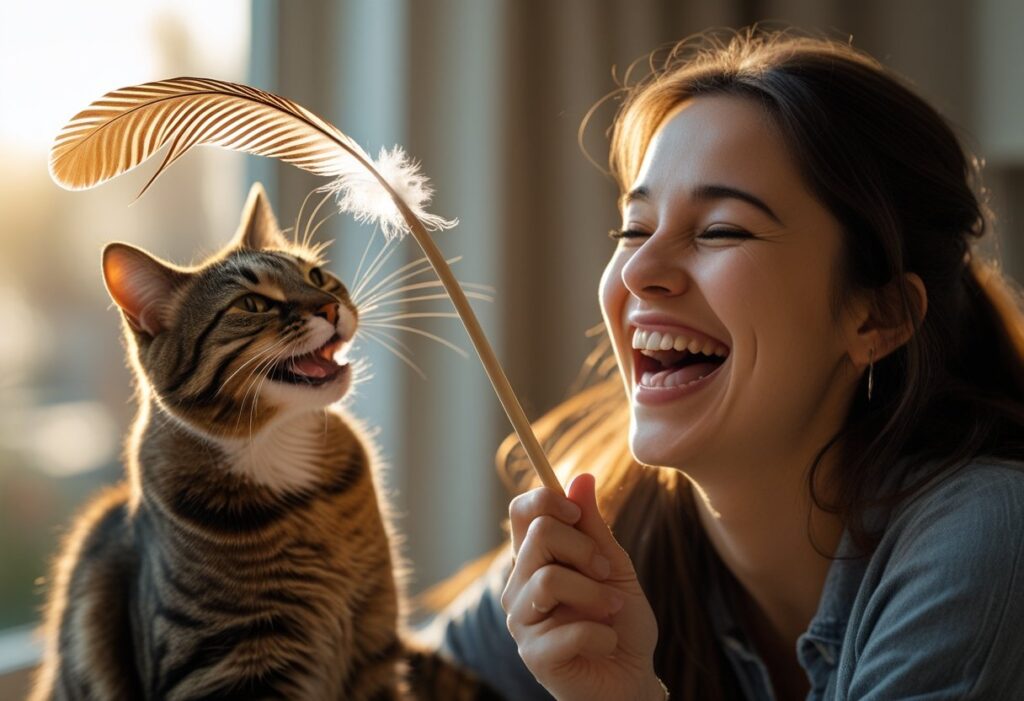
You share daily routines, living spaces, and emotional cues with feline companions. This relationship grew from practical cooperation into companionship, health support, and lasting cultural influence that still shapes how cat lovers view cats today.
The Bond Between Cats and Owners
You form bonds with cats through consistent interaction, shared space, and predictable care. Research on cats and humans shows that cats recognize individual people, respond to voices, and adjust behavior based on trust and routine, which explains why cats bond with humans.
Cats often choose proximity over constant attention. You may notice your cat sitting nearby instead of seeking touch, which reflects a social style closer to mutual presence than dependency.
Common behaviors that signal bonding include:
- Slow blinking and relaxed posture
- Following you between rooms
- Seeking specific times for contact
These patterns shape how many cat owners describe their relationships as calm, steady, and personal rather than performative.
Cats’ Impact on Human Health
Living with cats can influence your mental and emotional state, depending on how you relate to them. Studies examining relationship styles show that people who view them as companions or friends report stronger emotional benefits, including reduced stress and improved mood, as noted in research on cats having a profound effect on physical and mental health.
You often benefit from routine and quiet interaction rather than high activity. Cats fit well into smaller homes and structured schedules.
Reported benefits for cat owners include:
| Area | Observed Effect |
|---|---|
| Stress | Lower perceived stress levels |
| Mood | Increased feelings of calm |
| Routine | Greater daily consistency |
These effects depend on expectations and respect for feline behavior.
Cultural Roles Through History
Cats shaped human societies long before modern pets existed. Early agricultural communities valued cats for pest control, which led to sustained contact and eventual companionship, a pattern described in the long history of human interaction with cats.
In ancient Egypt, cats held religious significance and were linked to Bastet, also known as the goddess Bast, who represented protection and domestic life. This reverence set a precedent for treating cats as more than tools.
Today, culture reflects that shift. Cat shows, governed by groups like The International Cat Association, emphasize breed standards and temperament, while modern cat facts focus on behavior, cognition, and adaptability rather than utility alone.
Cats in Culture and Pop Iconography
Cats appear repeatedly in storytelling, visual art, religion, and mass media. You see them used as recognizable characters, symbolic figures, and commercial icons that shape how people think about cats in everyday life.
Famous Cats and Characters
You encounter many well-known fictional and real cats that define cats in pop culture. Early animation introduced Felix the Cat, one of the first cartoon characters with global recognition, and his popularity helped establish cats as expressive, human-like figures in media.
You also recognize Tom and Jerry, where Tom’s role emphasizes persistence and physical comedy rather than realism. Garfield represents laziness and sarcasm, reinforcing a stereotype many people associate with house cats.
Modern fame often comes from the internet. Grumpy Cat became a viral figure whose image spread through memes, advertising, and merchandise, showing how a single photograph can create lasting cultural impact. Lists of famous cats in pop culture history highlight how these characters remain relevant across generations.
Notable examples you likely know:
- Felix the Cat – early animation and merchandising
- Garfield – comic strips and films
- Grumpy Cat – internet memes and branding
Cats in Art and Religion
Cats have carried symbolic meaning for thousands of years. In ancient Egypt, people treated cats as sacred animals and linked them to protection and domestic life, practices documented in historical cultural depictions of cats. Artistic representations from this period show cats seated beside humans, not beneath them.
In European folklore, artists often portrayed cats as mysterious or supernatural. The Cheshire Cat from Alice’s Adventures in Wonderland reflects this tradition through its disembodied grin and cryptic behavior.
You also see cats in religious and decorative art across Asia and the Middle East, where they commonly symbolize cleanliness, luck, or vigilance. These visual traditions still influence modern illustration and design.
Modern Pop Culture References
Today, cats function as global branding tools and media icons. Hello Kitty offers a clear example of how a simplified cat design can support decades of merchandise, animation, and fashion without complex storytelling.
Social platforms amplify this influence. Viral images and short videos spread rapidly, shaping humor and communication styles online. Articles on famous cats in pop culture show how modern audiences engage with cats more through visuals than narrative.
You see cats used in advertising, emojis, and digital stickers because audiences instantly recognize their expressions. This constant exposure reinforces cats as familiar, adaptable symbols rather than niche interests.
Feral Cats and Wild Cousins
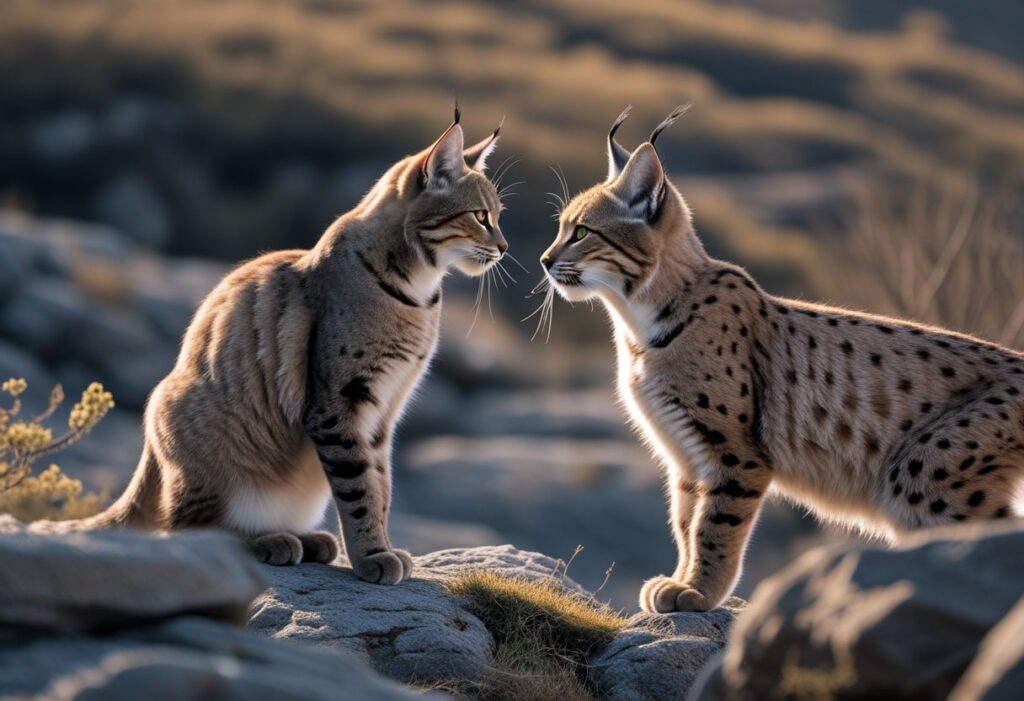
You often see cats living outside human homes, yet not all of them share the same origins or behaviors. Feral cats descend from domestic cats, while wild cats belong to naturally occurring species that evolved without human care.
Feral Cat Populations
You will find feral cats in urban, suburban, and rural areas, usually near steady food sources. They often form colonies that rely on shared shelter and coordinated behavior for survival. These groups tend to stay close to human settlements, even though they avoid direct contact.
Many communities manage feral populations through trap–neuter–return programs, which limit breeding and stabilize colony size. According to studies summarized in discussions on feral cat populations and behavior, most feral cats are born outdoors and never experience socialization with people.
You may consider this one of the more practical interesting facts about cats: despite their independence, feral cats still depend indirectly on human environments.
Differences from Domestic Cats
You can distinguish feral cats from domestic pets by behavior rather than appearance. Feral cats avoid handling, show heightened vigilance, and rely on hunting small prey to survive. Domestic cats, in contrast, tolerate or seek human interaction and depend on people for food and care.
Wild cats differ even further. Species such as lynx or ocelots evolved in natural ecosystems and have no domesticated ancestry, as explained in descriptions of differences between feral and wild cats. You will not see these animals living near cities or forming colonies around human activity.
If you compare them side by side, the distinctions become clear:
| Trait | Domestic Cats | Feral Cats | Wild Cats |
|---|---|---|---|
| Human contact | High | Minimal | None |
| Environment | Homes | Urban or rural edges | Natural habitats |
| Origin | Domesticated | Descended from pets | Naturally evolved species |
These differences shape how you understand cat behavior beyond the household.