
10 Facts About Cats That Will Make You LOL: Furry Feline Fun
Cats turn everyday life into comedy without trying, and you’ve probably laughed at more than a few of their habits already. From strange sleep choices to sudden bursts of chaos, their behavior feels oddly specific and reliably funny.
You’re about to discover 10 true cat facts that explain why cats act like tiny comedians, mixing real biology with laugh-out-loud behavior. These facts connect what you see at home with the weird logic running inside that furry head.
You’ll move from genuinely surprising truths to small, odd details about whiskers, breeds, and everyday quirks. Each fact adds context to the moments that make you stop, stare, and laugh at your cat like it just told a joke on purpose.
Hilarious and Mind-Blowing Cat Facts
Cats manage to look serious while doing things that make you laugh out loud. They fold, vibrate, vanish, and vocalize in ways that feel impossible but happen daily in homes with domestic cats. These fun facts about cats explain why your camera roll stays full.
Cats Squeeze Into Unbelievable Spaces
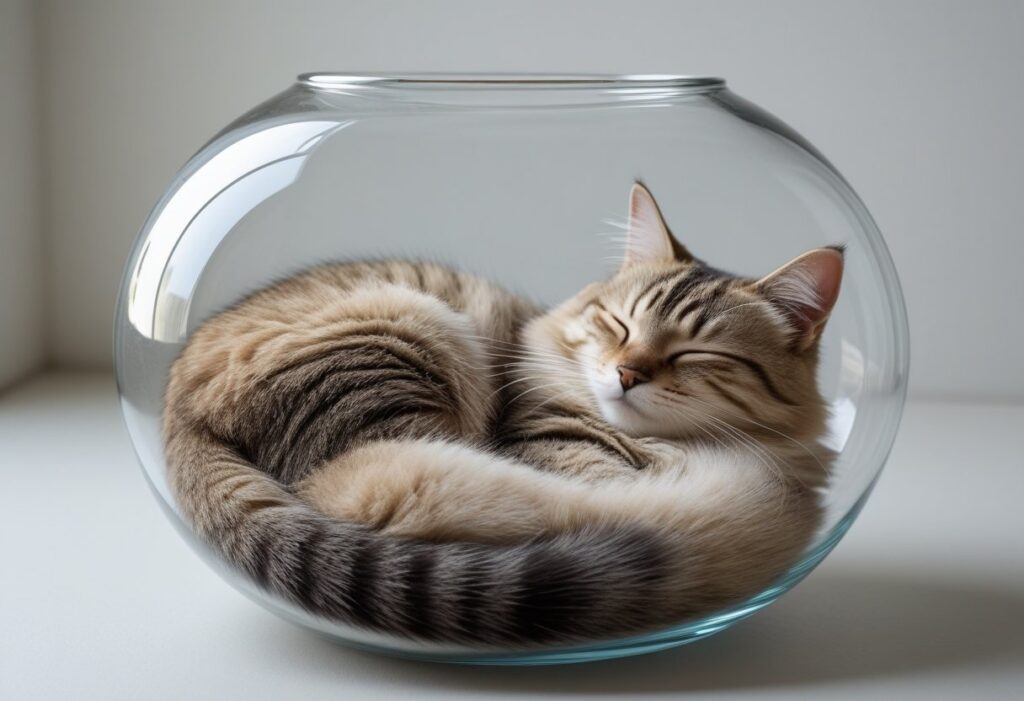
You buy a plush bed, and your cat chooses a shoebox. Cats squeeze into tight spaces because their flexible collarbones let their shoulders slip through openings that match the width of their head.
This skill helps them hide, hunt, and observe without being noticed. It also explains how your cat fits into a cereal box and looks offended when you question it.
Why small spaces win:
- They feel secure from all sides
- Body heat stays trapped
- Predators feel less threatening
Facts about cats get funnier when you realize this behavior comes from survival instincts, not poor decision-making.
Purring: Nature’s Tiny Fuzzy Speaker
When cats purr, they vibrate at a steady rhythm created by rapid muscle movements in the larynx. Cats purr during naps, meals, stress, and vet visits, which makes the sound both comforting and confusing.
Research links common purr frequencies to relaxation and tissue recovery. Your cat may purr to calm itself, signal safety, or keep you seated longer.
You experience it as a soft engine on your chest. Your cat experiences it as efficient communication with built‑in sound effects.
Curious Cat Antics and Playful Mischief
You set something on the counter, and your cat locks eyes with you before pushing it off. This is not an accident.
Cats test cause and effect through play. They bat, knock, and chase objects to see what moves, falls, or reacts.
Common mischief triggers:
- Boredom
- Curiosity
- Wanting your attention right now
Domestic cats keep these instincts from their hunting past. You get chaos. They get enrichment.
Cats Sleep More Than Your Lazy Roommate
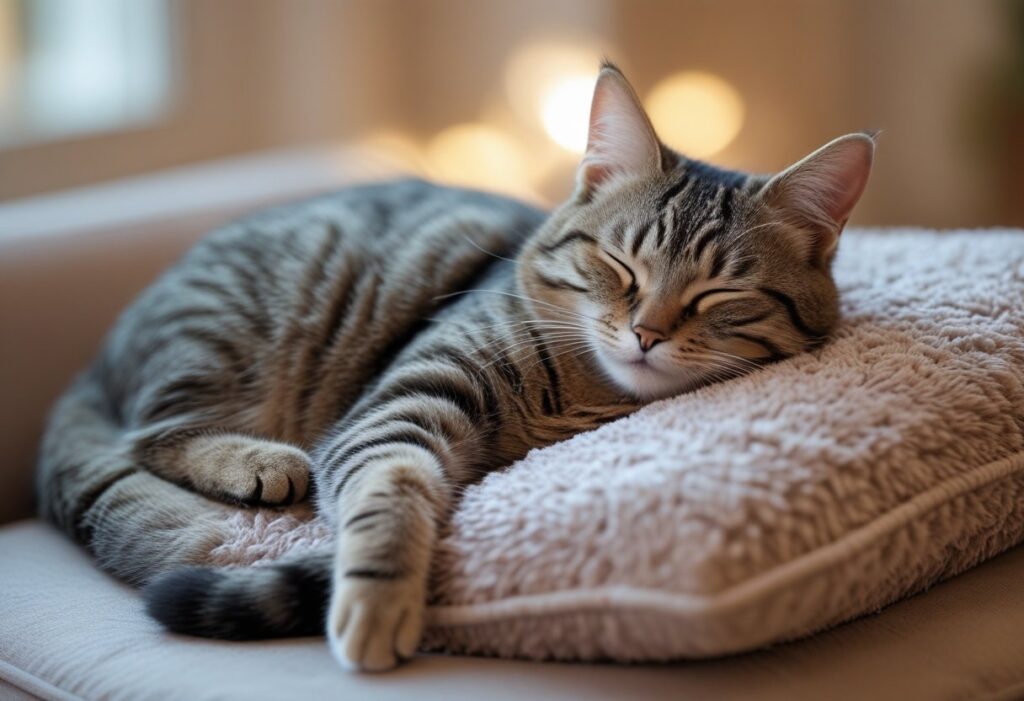
Cats sleep about 12 to 16 hours a day. Kittens and seniors sleep even more.
This schedule supports short bursts of intense activity. Your cat naps all afternoon, then sprints at midnight like it trained for this moment.
| Cat Type | Average Sleep |
|---|---|
| Kittens | 18–20 hours |
| Adult cats | 12–16 hours |
| Senior cats | 16–18 hours |
Cats sleep lightly, even when they look unconscious. One snack bag sound proves it.
Meow Mix: Surprising Cat Communication
Adult cats rarely meow at each other. They meow at you.
Cats develop specific sounds to get results, including short chirps, long complaints, and dramatic yowls. You probably recognize at least three without trying.
Slow blinks signal trust. Tail flicks show irritation. Silence usually means mischief loading.
These facts about cats explain why you feel trained. You are. Your cat built a custom language just for you.
Whiskers, Breeds, and Other Furry Oddities
Your cat looks simple, but the details tell a stranger story. Whiskers act like sensors, breeds vary wildly in size and behavior, and scratching posts exist for serious biological reasons.
The Weird Science of Cat Whiskers
Your cat’s whiskers are not decorative accessories. Each whisker connects to nerves and blood vessels that send precise information to the brain.
Whiskers detect air movement and nearby objects, which helps your cat move confidently in low light. They also help judge whether your cat’s body can fit through tight spaces.
Key whisker facts you’ll actually use:
- Never trim them; cutting whiskers can disrupt balance
- Whiskers often match your cat’s body width
- Mood shows in whisker position, not facial expressions
You may also spot whiskers above the eyes and on the front legs. Those extras help with hunting and landing jumps without face‑planting.
Maine Coon Cat: The Fluffy Giant
If your cat feels suspiciously heavy, you might live with a Maine Coon cat. This breed ranks among the largest domestic cat breeds by length and weight.
Maine Coons grow slowly and often reach full size around age four. Adults can weigh over 18 pounds without being overweight.
Common Maine Coon traits:
- Long, shaggy coat with water resistance
- Large paws with fur between the toes
- Calm, social behavior compared to many breeds
Despite the size, these cats act gentle and curious. You get the presence of a small big cat without the legal paperwork.
From Tuxedos to Tigers: Cat Breeds and Relatives
Domestic cat breeds range from hairless to extremely fluffy. Coat pattern does not equal breed, even if your tuxedo cat looks formal.
All domestic cats share ancestry with wild relatives like lions and tigers. Big cats differ in size and behavior, but the hunting instincts look familiar.
Domestic vs. big cats at a glance:
| Trait | House Cats | Big Cats |
|---|---|---|
| Purring | Yes | Some species |
| Retractable claws | Yes | Yes |
| Social structure | Flexible | Species‑specific |
Your cat did not forget its roots. It just hunts toys instead of antelope.
Cat Scratching and the Marvel of Scratching Posts
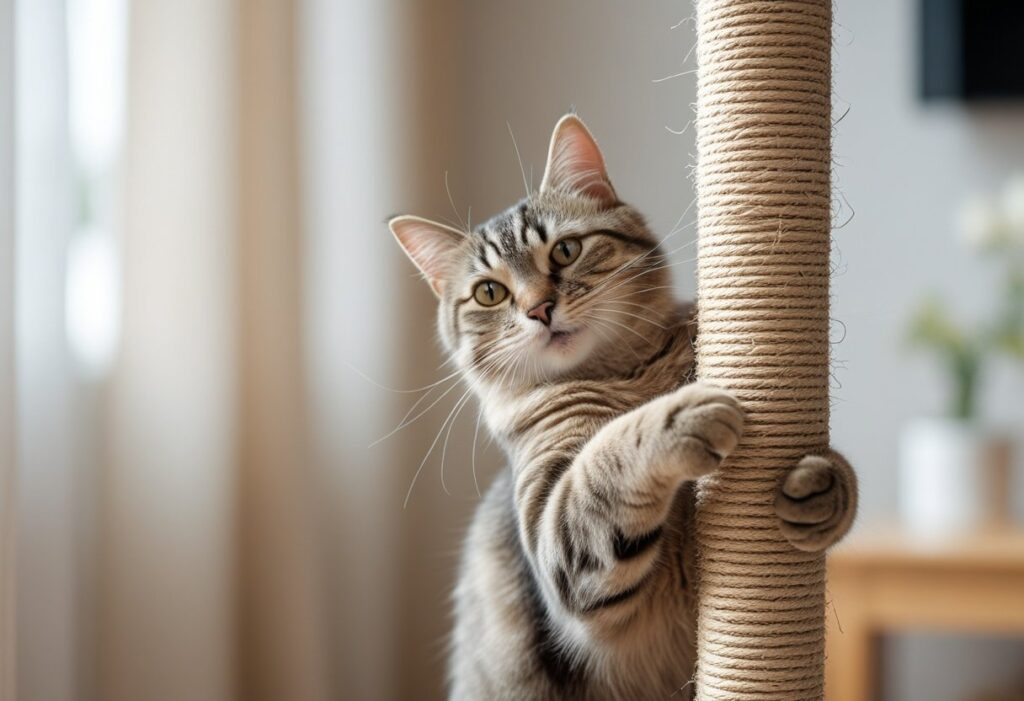
Your cat scratches to mark territory, stretch muscles, and maintain claw health. It is not revenge for late dinner.
Scratching posts work best when they stay tall and stable. Cats prefer vertical surfaces that let them fully extend their bodies.
What makes a scratching post effective:
- Height equal to or taller than your cat
- Sturdy base that does not wobble
- Materials like sisal or rough fabric
Place the post near sleeping areas or favorite hangouts. Your furniture will thank you, even if your cat never does.